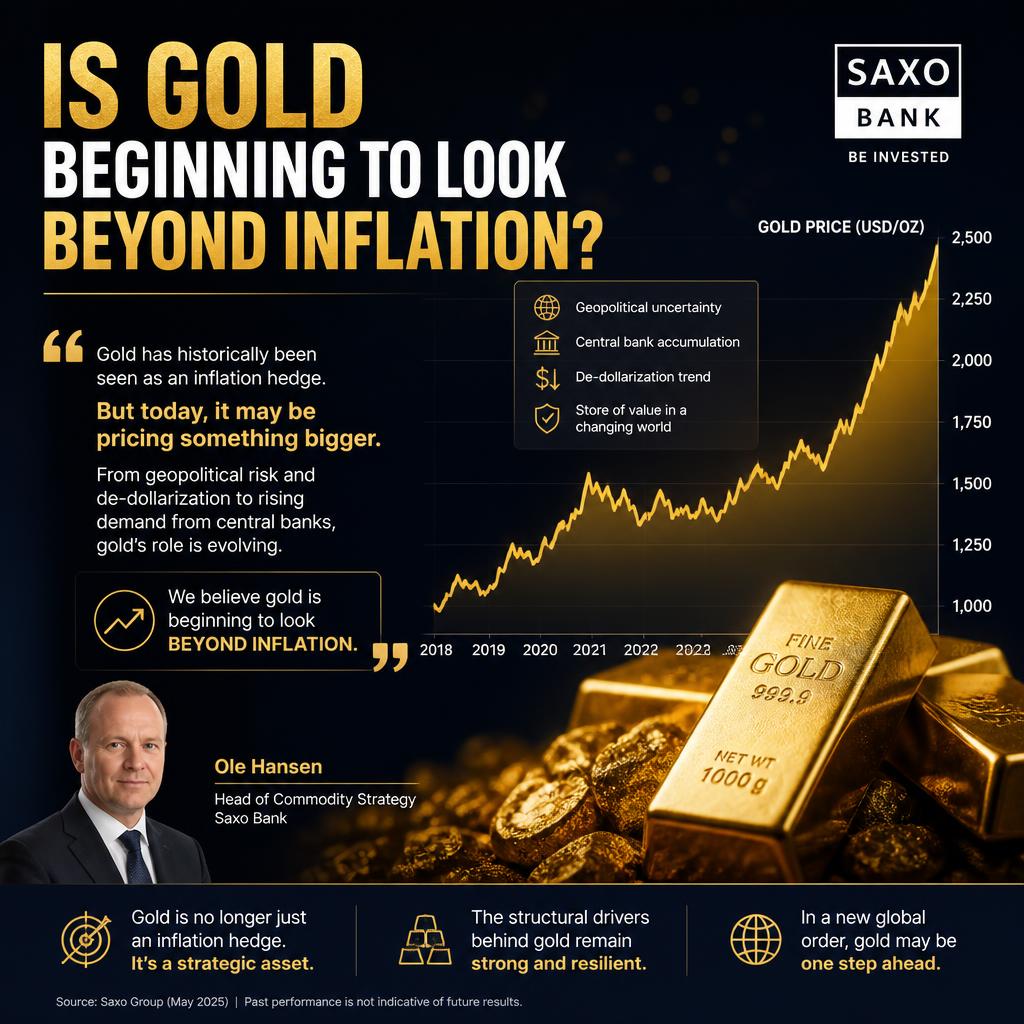

Gold often moves in waves—strong rallies can be followed by periods of pullbacks. When prices dip, investors naturally wonder whether the long-term investment thesis is breaking down. But pullbacks don’t necessarily signal a damaged outlook. As VanEck highlights, even when gold experiences a “pause” or retracement, the underlying long-term investment case can remain intact—particularly for investors who think in years, not days.
In this article, we’ll explore why gold can pull back without the bigger story changing. We’ll also look at the factors that tend to support gold over the long run, how investor behavior often shifts during volatility, and what a disciplined approach can look like for building a position when market sentiment is mixed.
What does “gold pullback” really mean?
A gold pullback typically refers to a decline from a recent peak or a short-to-medium-term dip within a broader uptrend. It can be triggered by changing expectations for interest rates, shifts in real yields, a stronger U.S. dollar, risk-on market sentiment, or profit-taking after a run-up.
Importantly, a pullback is not the same thing as a broken trend. Markets frequently revisit support levels or cool off after reaching crowded positioning. Gold is no different. Price retracements can be a normal part of how investors rebalance exposure as new information enters the market.
For long-term investors, pullbacks can even be constructive—offering opportunities to add exposure at more favorable levels, assuming the fundamental drivers remain supportive.
Why the long-term investment case can stay intact
VanEck’s view—“gold pullback, long-term case remains intact”—captures a key point: gold’s investment appeal is rooted in multiple durable drivers. Short-term price action may fluctuate based on macro data releases, flows, and sentiment, but long-term value propositions often remain resilient.
Instead of asking whether gold will rise every week, it’s more helpful to assess whether the forces that historically support gold are still present. When those forces are intact, the investment case can remain valid even if near-term returns are choppy.
In other words, a pullback may reflect timing and positioning, not necessarily a change in gold’s long-range role as a portfolio diversifier and hedge against certain risks.
Gold’s fundamentals: more than one single driver
Gold does not rise or fall because of one factor. Its price behavior is influenced by a blend of economic conditions and investor preferences, including:
- Inflation expectations and purchasing-power concerns
- Real interest rates (returns after inflation)
- Currency dynamics, particularly the U.S. dollar
- Geopolitical uncertainty and risk sentiment
- Central bank buying and demand trends
- Financial-system hedging and portfolio rebalancing
Because these forces can move out of sync, gold can experience periods of weakness even while long-term conditions remain supportive. That is why pullbacks do not automatically invalidate the broader thesis.
Understanding the role of real yields
One of the most widely watched drivers of gold is the level of real yields. When real yields are rising, the opportunity cost of holding a non-yielding asset like gold can increase. That can pressure gold prices in the short term.
Conversely, when real yields ease—whether due to slowing growth, falling inflation expectations, or expectations for monetary policy—gold often regains momentum.
Crucially, real yields can be volatile. A “push higher” in yields may contribute to a pullback, while later data can reverse the move. For long-term investors, that’s why it’s useful to distinguish short-term rate movements from the broader direction of the cycle.
Why a stronger U.S. dollar can weigh on gold
Gold is priced globally, and the U.S. dollar typically has an inverse relationship with gold. When the dollar strengthens, gold can become more expensive in other currencies, dampening demand at the margin.
During periods of dollar strength—often associated with risk-off episodes or changing rate expectations—gold may pull back even when investors remain interested in hedging.
Over longer horizons, however, currency regimes can shift. If the dollar’s strength is temporary, gold may recover as market participants reassess forward expectations.
Risk sentiment and “rotation” in market behavior
Gold can also be affected by broader market sentiment. When equities rally and investors lean into risk assets, some demand for defensive hedges may soften. That can lead to short-term weakness in gold.
But risk sentiment tends to cycle. Even if markets “calm down” temporarily, uncertainty can return through geopolitical developments, policy changes, or unexpected economic data. Gold often benefits when uncertainty rises again.
A pullback, therefore, may simply reflect the market’s temporary preference for other assets—rather than a conclusion that hedging is no longer needed.
Central bank demand and long-term structural support
Another factor often cited by investors is steady central bank demand. When central banks diversify reserves and accumulate gold, it can provide a structural bid that helps anchor the market during periods of investor selling.
While this demand doesn’t prevent all price dips, it can make gold’s long-term outlook more resilient. In practice, that means a pullback may be met with fresh interest from institutional buyers or reserve managers, helping reduce the likelihood of a prolonged decline.
The psychology of pullbacks: why investors react
During a rally, investors often chase performance. When prices fall, the same investors may decide to exit—sometimes quickly—because the emotional experience of a decline can be intense. This “performance chasing and profit-taking” dynamic is one reason gold can swing.
It’s also why timing matters. Many investors attempt to buy at the lowest point or sell at the highest point. But for long-term investors, trying to time every fluctuation can lead to missed opportunities or repeated whipsaws.
Instead of focusing on the day-to-day movement, consider how gold fits into a multi-year plan: diversification, hedging, and preserving purchasing power through cycles.
Why long-term investors may view weakness as a feature, not a bug
A pullback can offer a more attractive entry point. In many cases, gold’s long-term upward path—supported by a mix of monetary, economic, and geopolitical forces—can still play out after a consolidation period.
When investors have a longer time horizon, they may be willing to accumulate gradually rather than demand immediate perfection from the price chart. This approach aligns with how markets often behave: they correct, consolidate, and then reprice based on evolving expectations.
For those building exposure, disciplined buying—whether through periodic purchases or a planned allocation—can reduce the stress of trying to identify the absolute bottom.
How to think about allocation: balance, diversification, and discipline
Gold should generally be viewed as one component of a broader portfolio strategy. The goal isn’t to “bet the farm” on a single asset class, but to diversify risk and improve resilience across different market environments.
Many investors use gold to help:
- Reduce reliance on any single macro outcome
- Provide diversification during volatility
- Act as a hedge against specific risks (such as currency debasement fears)
- Maintain a long-term store-of-value perspective
That said, everyone’s situation is different. It’s wise to consider your risk tolerance, investment horizon, and liquidity needs, and to consult qualified financial professionals when appropriate.
What changes (and what doesn’t) during a pullback
During a pullback, headlines may intensify and narratives can shift. Traders may focus on short-term signals, and commentators may proclaim “the end” of a trend. But in many cases, the fundamentals are more stable than the news cycle suggests.
The investment thesis for gold often revolves around persistent concerns and structural demand. If those remain in place—while interest rate expectations and short-term pricing adjust—gold can still recover and potentially resume its longer trajectory.
Therefore, it’s helpful to separate:
- Price movement (which can change quickly)
- Investment drivers (which typically evolve more slowly)
- Market positioning (which can drive short-term volatility)
Practical steps for investors watching gold
If you’re monitoring gold after a pullback, consider focusing on a few practical areas that can help you maintain clarity:
- Track macro drivers such as real yields, inflation expectations, and currency trends rather than only the price.
- Watch demand signals, including central bank activity and broader physical/demand dynamics.
- Use a plan for how and when you’ll build or maintain a gold allocation.
- Be cautious with leverage and short-term speculation if your horizon is long-term.
- Consider staggered entries (when appropriate) to reduce the risk of buying only at one point in time.
This type of structured approach can help you avoid making decisions based purely on headlines or short-term market emotion.
How physical gold fits into the long-term view
Many long-term investors prefer holding gold in physical form or through vehicles tied to physical bullion. Physical gold can appeal to investors looking for tangible exposure, particularly when they want a hedge-like allocation that isn’t dependent on the performance of a single financial security.
Regardless of the specific form—coins, bars, or other bullion products—the underlying idea remains similar: gold can serve as a long-term store-of-value component within a diversified portfolio.
When adding bullion, consider factors such as premiums, liquidity, and storage considerations. The goal is not simply to buy, but to buy in a way that aligns with your long-term objectives and practical needs.
Bottom line: a pullback doesn’t automatically mean a broken thesis
Gold pullbacks can test investor confidence, especially after strong rallies or during periods of macro uncertainty. But as emphasized in VanEck’s framing, a pullback is not necessarily a sign that gold’s long-term investment case has weakened.
Gold’s outlook is shaped by multiple enduring drivers—rates, inflation expectations, currency dynamics, geopolitical uncertainty, and demand trends such as central bank buying. When these foundational forces remain supportive, gold may fluctuate in the short term while still maintaining a constructive longer-term profile.
For investors, the most important takeaway is perspective. Instead of reacting to every dip, consider whether your long-term thesis is still intact and whether your portfolio strategy remains aligned with your time horizon.
If you’re evaluating gold after a pullback, treat the move as part of the normal market cycle—and focus on building a disciplined, diversification-focused approach that can endure volatility.